5M Method

Minerals · Microbiology · Organic Matter · Cover · Monitoring

One M for each finger of the hand. The 5M method traces a visible field problem back to its soil cause, then organizes the response into five areas that reinforce each other.

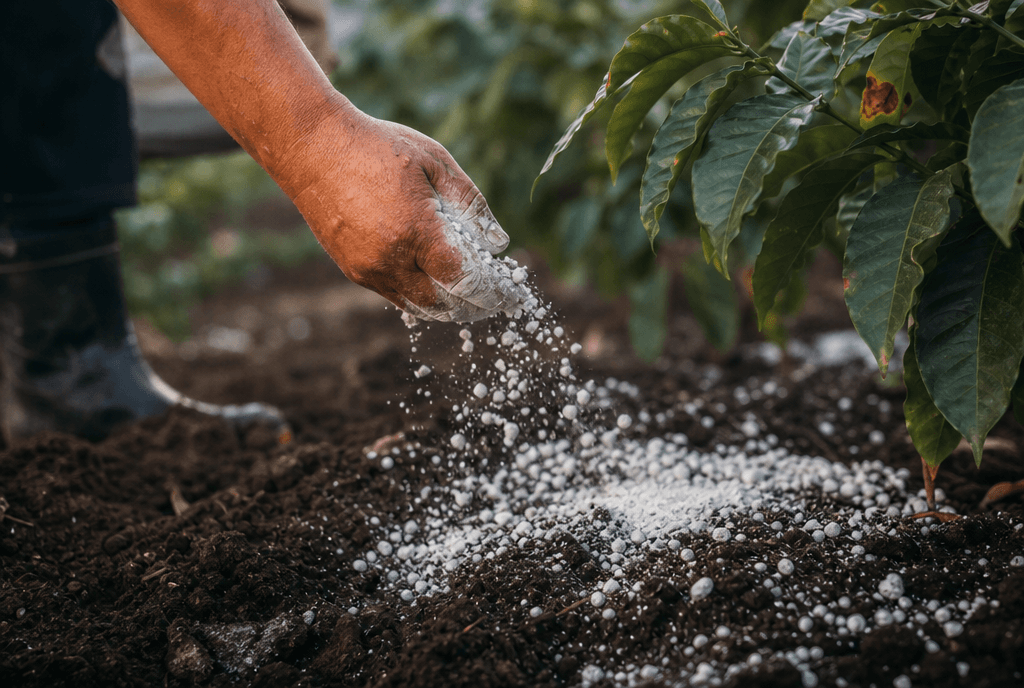
The problem is rarely too little fertilizer — it is imbalance. Excess nitrogen draws in sucking pests and weakens cells, while too much of one mineral blocks another, so money is spent degrading the soil. M1 gets the twelve main nutrients into their ranges, with pH and the calcium-to-magnesium balance corrected first, so what you apply is actually absorbed.

What we see

  • Fertilizing by habit, without interpreting a soil and leaf analysis.
  • Looking only at NPK; choosing inputs on price alone.
  • Excess nitrogen and potassium; deficits of calcium, boron and molybdenum.
  • Acid soils and high aluminium that lock up nutrients already present.

What we do

  • Start every plan with a well-interpreted soil and leaf analysis.
  • Design a crop- and stage-specific fertilization and liming programme.
  • Balance all 12 nutrients; correct pH and the calcium–magnesium ratio first.
  • Use SoilBalance software to turn the analysis into exact doses.
Olsen-P 15–20 mg/kgsufficient, not surplus — above ~25 mg/kg, mycorrhizal colonisation can drop 50–90% and zinc locks up

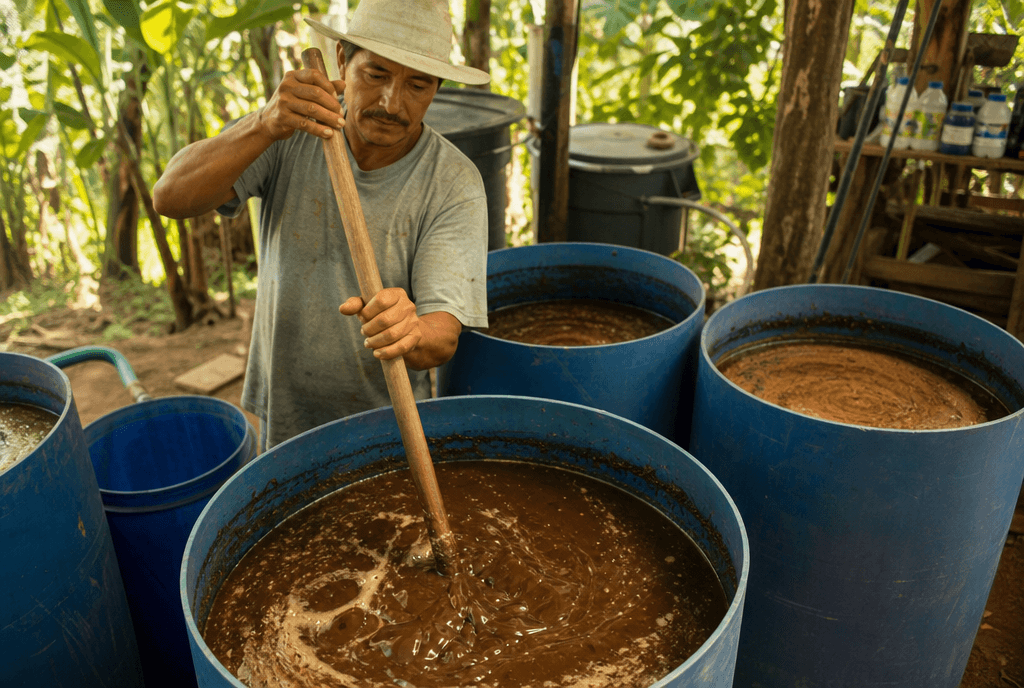
Soil life makes nutrition available, builds structure and defends the crop — without it, fertilizing is like serving a meal on a broken plate. Broad-spectrum fungicides and glyphosate-type herbicides kill that diversity, and the organisms that return first are often pathogens. M2 restores the conditions microbes need and re-inoculates, so biology does part of the fertilizing.

What we see

  • Fungicides, bactericides and glyphosate-type herbicides that kill beneficial microbes.
  • Acidic, compacted, low-carbon soil with no home or food for microbes.
  • Relying on a single commercial strain, or uncontrolled home brews of unknown quality.

What we do

  • Apply diverse microbial mixes — and re-inoculate regularly, not once.
  • Improve their conditions through carbon (M3) and cover (M4); feed balanced bionutrients (M1).
  • Use mineral-enriched biols (liquid bioferments), with basic quality checks: pH, EC, redox, microscope.
An earthy smell, earthworms, crumb structurethe quick field signal that biology is alive and working

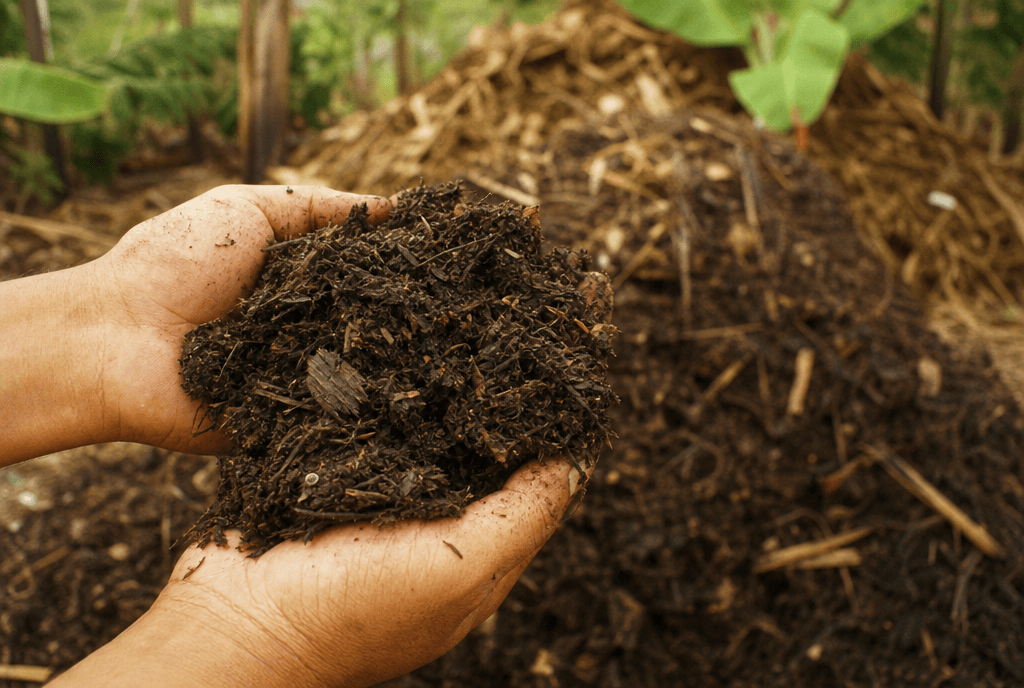
Organic matter holds water, feeds the microbiology and keeps the soil open — it makes every other nutrient more efficient. Growers undervalue it because its NPK is low, and burning prunings or removing pulp exports tonnes of carbon off the farm. M3 returns carbon and keeps a working balance of fast (fresh) and slow (stable) organic matter.

What we see

  • Treating organic matter as a low-NPK extra, not an efficiency multiplier.
  • Burning prunings or removing pulp and residues — exporting carbon off the farm.
  • Compost used without checking quality; excessive tillage that oxidises carbon.

What we do

  • Return prunings, pulp, manure and residues to the soil instead of burning them.
  • Make quality compost and bokashi, enriched with minerals and microbes.
  • Add stable carbon — biochar, humic acids, leonardite — and manage the carbon:nitrogen ratio.
Compost C:N ≈ 30:1finished when it smells earthy and cools to near-ambient — no ammonia

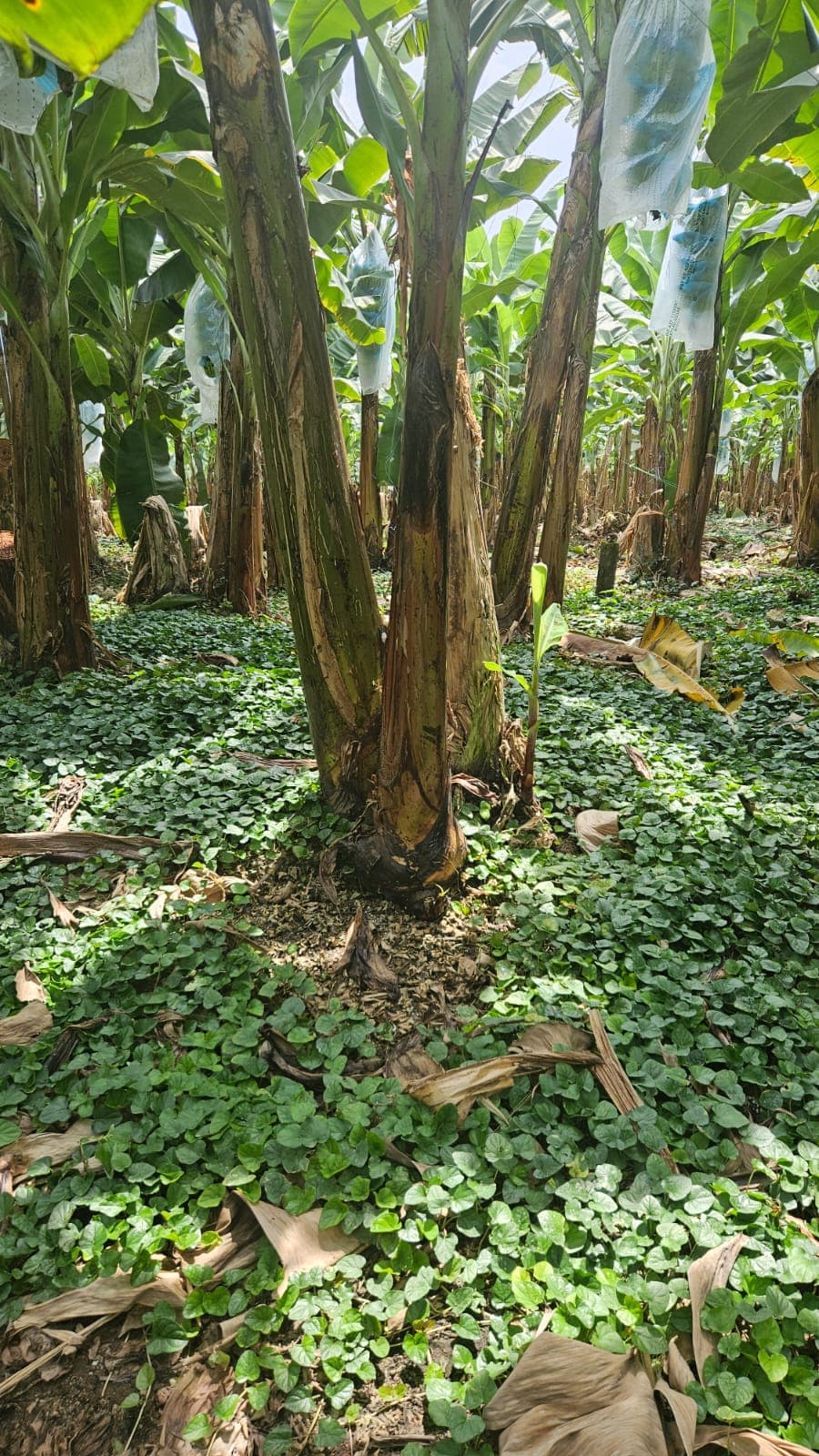
Living and dead cover protects the topsoil: it stops erosion, holds moisture, moderates temperature and adds large amounts of carbon. The fear that weeds "steal" nutrients comes from soluble-fertilizer thinking — when a managed cover decomposes, those nutrients return to the crop in organic form. M4 keeps the root zone covered and minimises herbicides.

What we see

  • Clearing the farm bare with glyphosate — causing compaction and erosion.
  • Burning or removing prunings and residues — discarding free carbon.
  • Treating every weed as a competitor, with no planned cover rotation.

What we do

  • Minimise or eliminate herbicides; keep the root zone covered.
  • Use planned cover crops — mucuna, canavalia, brachiaria — for biomass and nitrogen.
  • Mulch with prunings and leaf litter; read which weeds are present as soil indicators.
10,000–50,000 kg/ha · yearorganic matter from well-managed cover, much of it placed 20–50 cm deep by roots

M5 is how you know where a problem starts and whether a fix is working — farming without it is like driving with your eyes closed. But measuring more is not better: too many indicators, and a focus on symptoms over correctable causes, hide the real problem. M5 picks a few practical indicators and always compares a treated plot against a control.

What we see

  • Running analyses but not reading them; judging by a yellow leaf alone.
  • Data on loose paper with no relationships; trusting sellers over real data.
  • Measuring a lot, but not the right things — information that confuses.

What we do

  • Pair fast tools — pH meter, Brix refractometer, calicata (soil pit) — with periodic lab analysis.
  • Calibrate the quick measures against the lab; time them to the crop's growth stage.
  • Always run a treated plot against a control; centralise data in the SoilBalance app.
Treated plot vs. control plotthe only way to actually attribute an improvement to what you changed
See the 5M readout in the demo